Farmer Music Center Presentation to City Council (undated)


Farmer_Music_Center ppt to City Council (undated)

Farmer Music Center Records Request

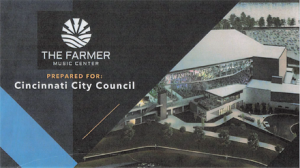
Apparently, this is the all the information that was presented to the city council concerning the $8 million subsidy request for the Farmer Music Center. The document is undated but presumably it was presented before the city council voted to include the subsidy in the FY27 budget.

I made a public records request for information the city council members relied on in their due diligence about the project. This is all the city disclosed – an 8-page powerpoint.

In a city council meeting, 5 council members voiced their support for the project citing projections about the positive economic benefits to the city and the return on investment the city would realize for our $8 million. So, I requested to see the analysis they were relying on to make those claims.  This powerpoint deck is all I received.

The CSO and MEMI are asking the city to invest $8 million in the Farmer Music Center but they provided the city council with nothing more than a “pitch deck” not an investors’ prospectus, which the city should absolutely require, at a minimum.

Links to the presentation and to my records request are provided above.

By the way, it took the city 5 weeks to provide an 8-page powerpoint presentation. Unacceptable.

Identifying the Financial Risks of the Convention Center Hotel Deal

As I mentioned the other day, the Budget, Finance and Governance Committee, at its meeting on Monday, April 20th, will do what is necessary to push along the convention center hotel deal for approval at Wednesday’s city council meeting.

Ever since there was agreement by the powers that be, that Cincinnati needed a “headquarters hotel” for conventions and an upgraded convention center, the momentum to make a deal built up and the deal gets to the finish line on Wednesday.  Once it started, it wasn’t going to stop. Whether it is a good deal or not.

So, this is not to criticize the deal. It is to help go into the deal with our eyes wide open.

The financing of the project is complicated. There are at least 9-layers of various sources of financing both public and private. The current estimated cost of the hotel is $564 million, and it is essentially 50/50 public and private. The convention center is all public funding.

Here are my observations about the convention center hotel project:

  1. In a June 18, 2025, article, the Cincinnati Business Courier reported that, “The city may need to put in $2 million to $3 million per year in additional resources, but those are preliminary numbers.” In other words, until the convention center and hotel start generating the projected increased tax revenues, the city will have to pay its obligations out of existing resources. It is anybody’s guess how many years that will be. We all know about projects that were supposed to pay for themselves that we will be subsidizing until the city shuts it down.


  1. As I mentioned the other day and as reflected in the first observation, the financial success of the project relies entirely on generating increased tourism and the various multiplier effects that result in higher tax revenues. So, the city is putting supply ahead of demand. The city will have to generate the demand.


  1. The financing plan, especially for the hotel, has 9 layers, and they all have to generate their projected funding. The Business Courier’s article provides a list, posted with this blog. There is one item not included on the Business Courier’s list. The city will agree to make a 30-year $50 million loan to the project. Any outstanding payoff after 30 years can be forgiven.


  1. The city’s financial commitment to the hotel is open ended. The project will be crowding out other uses for those tax revenues until the project starts “paying its way.” I have not seen any discussion of that.

To sum up, soon after the city council’s  approval of the “convention headquarters hotel,” on Wednesday, the city will begin subsidizing the project. An extensive financing stack kicks in and the city must begin paying its obligations related to the project. Since there are no increased tax revenues yet, the city must pay obligations out of existing funds.

As I mentioned the other night, if the murders, shootings, other violent crimes and teen mobs in Cincinnati are not abated to the point where the city’s safety image improves the project may have a problem succeeding. The city and county will have an updated convention center and a new hotel or two, but they may be underused and require continued subsidies to meet financial obligations.

The city council should already know what the bookings look like for the new convention center and hotel. The type of conventions that the city is trying to attract are planned years in advance. It would be good to know that baseline before ctiy council votes.


Convention Center and Hotel Project

Most things in the city government wind up in the Budget, Finance and Governance (BFG) Committee. That is why I focus on that committee and not some of the others.

You can get on a mailing list to get the agendas sent to you for whichever committees you are interested in,  as well the city council meetings. You need to contact the clerk of council to get on the mailing list.

On Fridays, they send out the agenda for Monday’s  meeting of the BFG Committee. The agenda for this coming Monday (4.20.26) is short, but it includes a major ordinance. They are going to approve the deal on the convention center hotel.

The city actually established a “Convention Center District,” including a plan for both the convention center and the convention center hotel.  Together, it is an approximate $750 million project, where the city is responsible for just about all the funding for the convention center and a substantial part of the hotel financing.

I am trying to put together a report on how all the financing works, but it is extremely complicated, at least for me. So, I am still working on it. (And I still intend to report out on the presentation of the Davenport financial advisors about the city’s credit rating).

In the meantime, one thing is clear.  For the city, the entire success or failure of the convention center project depends on whether the convention center generates enough ‘additional’ economic activity, like bars and restaurants, entertaining, shopping,  etc.  And that depends on whether downtown Cincinnati is perceived in the region and nationally as safe.

If you look at the publicly available documents, it is evident that the city’s strategy is a “If we build it, they will come,” strategy.  So, if “they do not come,” it will fail. The council should be concerned that the project could be significantly jeopardized by a national or regional perception that downtown Cincinnati is not safe.

Instead of asking how the CPD would reduce their FY27 budget by 5.1%, the city manager should be asking what the CPD could do with an additional 5%, 10% or more. And all the turmoil involving the Chief of Police drama does not help the city’s public safety image.

The reality is that the committee will approve to put the convention center deal on the agenda for Wednesday’s city council meeting, where it will be approved 9-0, no questions asked.


Observations about the “Chief Theetge Report” April 1, 2026

Chief Theetge investigation report

It is too bad that this “investigation” involving Chief Theetge is such a serious matter and that the city has allowed what looks like a management problem to be handled (or mishandled) in such a public way.

I am not going to criticize the attorneys who carried out the investigation except to say that they do not appear to have spent much time around the police and the “police culture.”  Despite that,  there is no benchmarking in the report to indicate that the culture they found in the CPD is any different than other police departments. Nor is there any other context about city politics provided by the report.

Who knew that cops complain about their bosses? Or that policing is characterized by a command and control culture? Nowadays, the issue is not whether police departments have a culture of command and control but rather, “is the command and control excessive?” The report does not seem to make that case.

The report uses the word “believes” and its various iterations, between at least 40 and 50 times in a 9 page memo.  Throughout the memo, the investigators report that, “the witness believes,” “many witnesses believe”, “some witnesses believe,” a majority of witnesses believe,” etc.

Usually investigative reports use terms such as “we found,” or “our findings show,” etc. The report draws conclusions, but the conclusions are based strictly on perceptions.

As a result, the city has been provided what is referred to as a “perception-based” investigation, not evidence-based.  In other words, the report is a (very expensive) cultural assessment for which the city already knew the results.

Unfortunately, for the mayor and city manager, unpopular ≠ ineffective. There is zero data in the report concerning Chief Theetge’s alleged ineffectiveness. With respect to the brawl on 4th street, the report comes across as finger pointing.

One reported “belief,” shared by “many” concerned a claim of nepotism because a nephew of Chief Theetge, who was already on the force and had recently obtained his law license, was promoted, or assigned, by  Chief Theetge as the CPD’s legal liaison. But the investigators made no finding as to whether the situation constituted nepotism or not. Nepotism, in many cases, is not clear cut when the evidence is applied against the rule.  The report makes no finding either way.

There must be a full report beyond the 9-page memo, including whatever evidence the law firm gathered. At a minimum there should be transcripts of the interviews conducted by the law firm. But the public will likely not get access to those records until the matter has been finally adjudicated.

For those who are predicting that this matter will result in a law suit against the city, that the city will lose, I think they are right.


City of Cincinnati Resident Survey Findings 2027

City of Cincinnati Resident Survey Findings 3.16.26.

One of the highlights of yesterday’s (3.16.26) meeting of the Budget, Finance, and Governance Committee was the presentation of the results of the bi-annual Resident Survey.

The reaction of two council members in particular (Albi and Owens) was worth the price of admission. They were more than a little butt hurt by the briefing slide: “A Citywide Shift in Perceptions.”
But they were able to convince themselves that the results had nothing to do with their performance, it was just perceptions.

Most frequent recipients of Leveraged Support, etc. (2020-2026)

Most Frequently Funded External Recipients 3.8.26


For the past 7 -10 years, Cincinnati  has steadily outsourced city functions to nonprofit organizations. Since 2020, the city’s budget has evolved to include tables in the annual budget for “Leveraged Support,” “Funding for Competitive Grant Programs,” and “City Operations Programmatic Support and Recipients.”

These categories represent funding for external organizations to carry out governmental functions.  This is not a slight against nonprofit organizations. But this outsourcing makes it much more difficult for taxpayers to know what is happening with public funds. i.e., transparency and accountability.

We have developed a data base of funding for those three categories of external support based on city budget documents for the period 2020 to 2026.

The first thing you notice is that many of the same organizations receive funding every year. Meaning: the process is not a true competition and more significantly, these organizations are essentially part of the city government without the transparency and accountability.

The link above will take yo to the list of “Most Frequently Funded Recipients.” We will be posting additional analysis that could be of interest.

The Cincinnati Exchange Covers the Citizen Watchdog Year-in-Review (2.12.26)

The Cincinnati Exchange devoted its front page headline today to the Podcast’s Year-in-Review.  I got a big assist from ChatGPT but I must say, I don’t think I could have reported it better my self.


https://thecincinnatiexchange.com/citizen-watchdog-year-review/

Digging into the city council’s 2022 property tax increase

Episode 41 of “Citizen Watchdog with Todd Zinser,” discusses the increase in the property tax milage rate approved by the city council in 2022, just in time to maximize the tax revenues anticipated from the reassessment of property values hitting homeowners at the time.  The council raised the rate to the maximum 6.1% and it has remained there since.

In putting Episode 41 together, I came across a motion submitted by Mayor Pureval on December 14, 2022, indicating how he intended to spend the increased tax revenues. The motion is posted below. I annotated the Mayor’s motion to show how his proposed spending ties directly back to the tax increase.

The motion also required a report from the Administration “on detailed funding and implementation of these programs before April 15, 2023.”  (4 months to get it done)

On January 7, 2026, I submitted a records request for the report. Today, (2.11.26) the city responded indicating that no report was ever submitted to council.  That has happened before on other reports, like the justification for closing CPD District 5.

The problem is that the council’s request is actually a request on behalf of the council’s constituents. It is just ignored and the council does not bother to follow up. It gives the impression that these types of request are just made for show.

Also, ICYMI, the Mayor and council missed the deadline for certifying a tax increase measure for the May 5th ballot. The deadline was February 4th.


$5.42M Public Safety Funding Update

COMMUNICATION cramerding


This is the opening paragraph of the Executive Summary

” As of January 15, 2025, $150,777.70 remains available from the original appropriation of $5,420,000. The administration has spent or encumbered $3,982,222.30, with an additional $1,287,000 in pending expenses. A detailed summary of the expensed/encumbered funds as well as the pending expenses appears below.”

I think it is a helpful report. It would be great if the memo had a schedule attached that clearly shows how much has been encumbered and for which purposes. The City manager combined the figures for “spent” and “encumbered.” But in order to see how well the city is delivering on the $5.42 million, the report should also combine the “remains available” figure and the “encumbrances.”  Those are the funds that actually remain unspent.